You arrive at the retreat with good intentions. You're going to rest. Really rest. No work, no obligations, just pure relaxation.
Then you get there and realize you don't actually know how to do nothing.
You feel guilty for not being productive. You get restless after an hour of sitting still. You start planning activities to fill the time because unstructured hours feel uncomfortable.
This is normal. Most of us have spent years training ourselves to be constantly productive. The skill of doing nothing has atrophied.
But it's a skill worth relearning. Because real rest — the kind that actually restores you — requires letting go of the need to be productive.
Why Doing Nothing Feels So Hard
Our culture glorifies busyness. We wear exhaustion like a badge of honor. We measure our worth by our productivity.
This creates a specific kind of anxiety around unstructured time. When you're not doing something productive, you feel like you're wasting time. Like you should be accomplishing something.
This anxiety follows you to retreats. You book time away specifically to rest, but when you get there, you can't turn off the voice that says you should be doing more.
The first step to actually resting is recognizing this voice and choosing not to listen to it.
What Real Rest Actually Looks Like
Real rest isn't about sleeping more (though that helps). It's about giving your mind permission to wander without purpose.
It looks like:
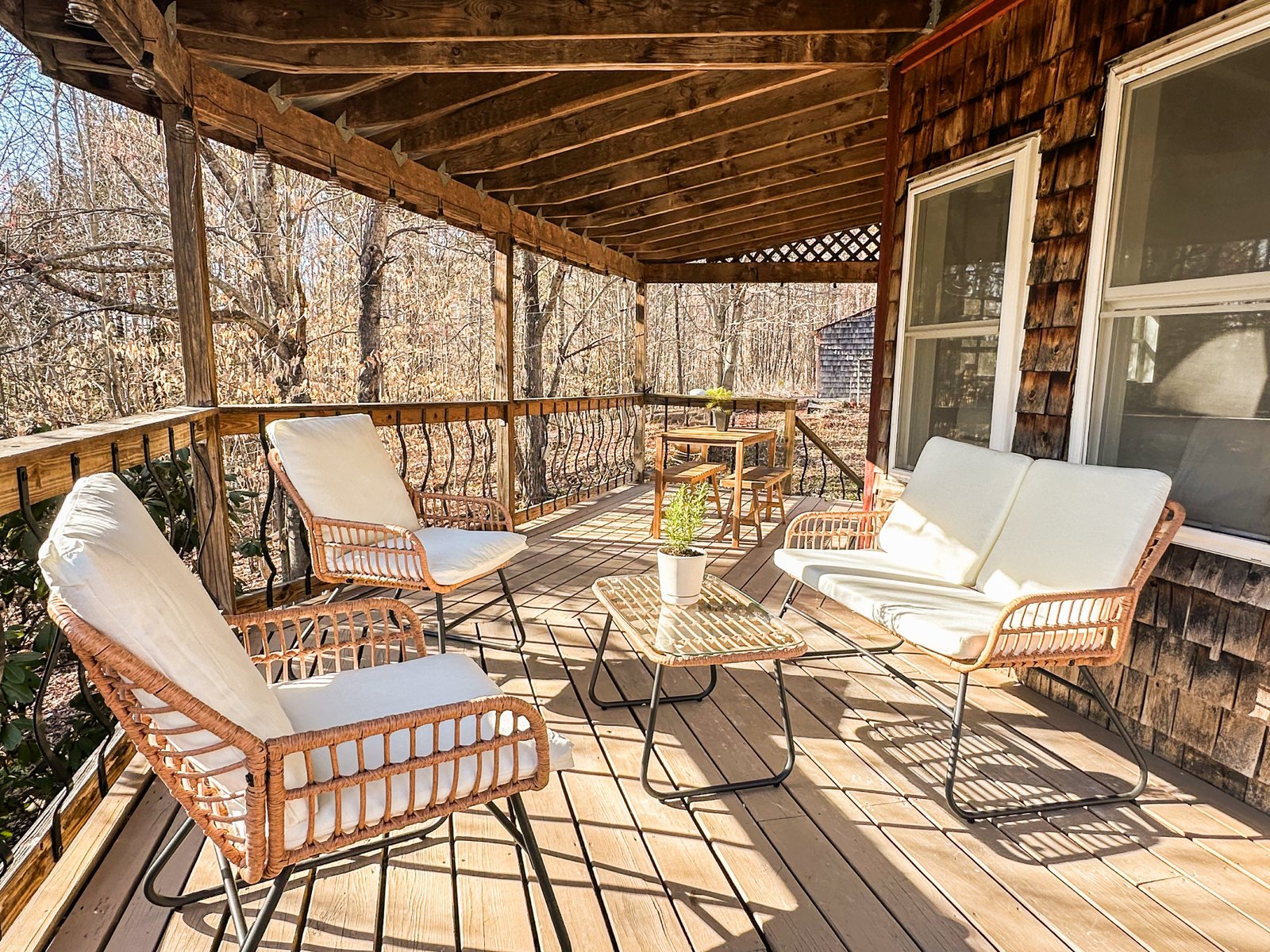
Sitting on the deck with coffee, watching the forest, thinking about nothing in particular
Reading a book for pleasure, not to learn something or improve yourself
Taking a walk without a destination or fitness goal
Lying in bed after you wake up, not immediately reaching for your phone
Cooking a meal slowly, without rushing to the next thing
Notice what these activities have in common: they're not productive. They don't accomplish anything. They don't move you toward any goal.
That's the point.
The Permission Problem
Most people need explicit permission to do nothing. So here it is:
You are allowed to spend an entire day doing nothing productive.
You are allowed to be bored.
You are allowed to waste time.
You are allowed to rest without earning it through productivity.
This might feel uncomfortable at first. That's okay. Discomfort is part of the process of relearning how to rest.
"Rest is not a reward for productivity. It's a requirement for being human."
Practical Strategies for Doing Nothing
If you're used to constant productivity, doing nothing requires practice. Here are strategies that help:
Leave your phone in another room. Not on silent. Not face-down. In another room. The constant availability of your phone makes it impossible to truly disconnect.
Don't plan activities. The point of a retreat is unstructured time. If you fill your schedule with activities, you're just relocating your busyness.
Embrace boredom. When you feel bored, resist the urge to immediately fill that space with stimulation. Sit with the boredom. Let your mind wander. This is where creativity and insight emerge.
Notice when you're performing. Even alone, we often perform productivity. We do things because we think we should, not because we want to. Notice when you're doing this and give yourself permission to stop.
Redefine productivity. Rest is productive. Recovery is productive. Doing nothing is productive because it allows you to return to your life with more energy and clarity.
What Happens When You Actually Rest
When you give yourself permission to truly do nothing, something interesting happens.
The first day: You feel restless. Guilty. Like you should be doing something. This is normal. Sit with it.
The second day: The restlessness starts to fade. You notice you're breathing deeper. Your shoulders have dropped. You're not checking the time as often.
The third day: You start to enjoy the unstructured time. You read for hours without realizing it. You have thoughts you haven't had in months. You feel creative again.
The fourth day: You realize you haven't thought about work in 24 hours. You feel lighter. More like yourself. The constant background anxiety has dissolved.
This progression doesn't happen if you fill your retreat with activities. It requires actual unstructured time.
The Role of Environment
Environment matters for rest. You can't truly do nothing if you're in an environment that demands your attention.
A crowded hotel keeps you in "public mode." You're aware of other people. You moderate your behavior. You can't fully relax.
A private retreat on 27.7 acres removes that awareness. You can exist without performing. You can be loud or quiet, active or still, without considering anyone else.
That freedom is what allows real rest to happen.
Common Obstacles and How to Handle Them
Guilt about not being productive: Remind yourself that rest is productive. You're not wasting time — you're investing in your ability to function when you return to regular life.
Restlessness: This is your body adjusting to a slower pace. Don't fight it. Take a walk. Sit outside. Let the restlessness pass without trying to fix it.
Boredom: Boredom is not a problem to solve. It's a space where creativity emerges. Sit with it. See what thoughts arise.
Feeling like you should be doing more: This is conditioning, not truth. You don't have to earn rest. You don't have to justify it. You're allowed to simply be.
Bringing It Home
The goal of learning to do nothing at a retreat isn't just to feel good while you're there. It's to carry that skill back into your daily life.
After you've experienced what real rest feels like, you start to notice when you're running on empty. You become more protective of your downtime. You're less willing to fill every hour with productivity.
You might start building in small pockets of nothing: 15 minutes in the morning with coffee before checking your phone. A walk without your headphones. An evening without plans.
These small practices compound. They create a baseline of rest that prevents the kind of burnout that requires a retreat in the first place.
The Paradox of Doing Nothing
Here's the paradox: doing nothing is one of the most productive things you can do.
When you give your mind space to wander, you solve problems you've been stuck on. You have insights you couldn't access when you were busy. You return to your work with more energy and clarity.
But you can't do nothing with the goal of being more productive. That defeats the purpose.
You have to truly let go. Trust that the rest will serve you, even if you can't see how in the moment.
Reserve a quiet stayFinal Thoughts
Learning to do nothing is a skill. Like any skill, it requires practice.
Don't expect to be perfect at it on your first retreat. You'll probably still feel guilty. You'll probably still get restless. That's okay.
The point is to start. To give yourself permission to rest without earning it. To remember what it feels like when you're not constantly productive.
Because rest isn't a luxury. It's not something you do after you've accomplished enough.
Rest is a requirement for being human. And the sooner you learn to embrace it, the better your life will be.